
Book Title: When the Body Says Stop: Your Nervous System Knows Before You Do
Author: Mae Larkin
Rating: ⭐⭐⭐⭐⭐ 5.0 / 5.0 (Essential Reading)
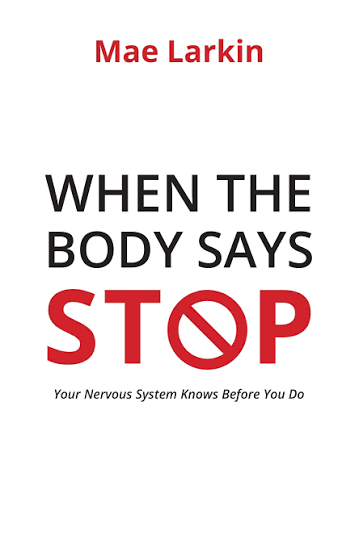
Quick Summary: If you have ever suffered from unexplainable stomach aches, recurring migraines, or sudden physical exhaustion while every medical report came back completely clean, this book provides the missing explanation. In When the Body Says Stop, Mae Larkin breaks down how unresolved stress, toxic workplace politics, and the compulsive habit of “being nice” force our nervous system to pull the emergency brake when our minds refuse to set boundaries.
The Big Question: How Does the Body Actually Say “Stop”?
Looking at the title of Mae Larkin’s book, When the Body Says Stop, your first thought might be: How does a body actually say stop?
Doesn’t the body just signal routine physical symptoms? If something is wrong, shouldn’t it simply give you a high fever or an intense headache so you physically cannot work and are forced to lie down and rest?
The short answer is yes—that is one way your body forces you to pause. But Larkin goes much deeper. She reveals that sudden, incapacitating breakdowns almost never happen out of nowhere.
That sudden migraine, severe stomach spasm, or fever is rarely an isolated incident. Instead, it is the final explosion of warning signs that were piling up over weeks, months, or even years. Long before a major health scare occurs, your nervous system begins sending quiet, early whispers:
- A knot in your stomach every Sunday evening.
- Tight, locked shoulders while reading workplace emails.
- Shallow breathing during tense meetings.
- Persistent digestive flare-ups after prolonged emotional strain.
Because these early signs do not completely immobilize us, we ignore them. We pop an antacid, drink an extra coffee, convince ourselves it’s just a passing ache, and keep grinding. We push past the discomfort until our biology runs out of gentle ways to get our attention.
When you refuse to listen to the whispers, your body has only one option left: it gives you an undeniable crisis—a high fever or debilitating pain—leaving you with no choice but to drop everything and stop.
The Hidden Culprit: Office Politics, Endless Hours, and Chronic Stress
When we think of workplace stress, we often assume it comes from high workloads or heavy technical tasks. But for many professionals, the real damage doesn’t stem from the work itself.
It comes from navigating toxic office politics for hours on end.
Enduring subtle manipulation, walking on eggshells around unpredictable managers, sitting through passive-aggressive meetings, and managing workplace friction without a safe outlet takes a severe toll on human biology. Your nervous system doesn’t differentiate between being chased by a predator and sitting in a hostile boardroom; it perceives threat all the same.
In response, your adrenal glands release continuous micro-doses of cortisol and adrenaline. Over time, this sustained “fight-or-flight” state disrupts your gut, exhausts your immune system, and dysregulates your nervous system. You might convince yourself you are managing just fine, but your nervous system keeps an exact physiological ledger of every stressful hour you endure.
The “Nice Person” Trap: How Failing to Say “No” Makes You Sick
One of Mae Larkin’s most powerful observations centers around people-pleasing and suppressed emotions.
Why do so many conscientious, dedicated professionals end up burned out? Because we are conditioned to believe that “being nice” means never causing friction.
- We say “yes” to impossible deadlines when we are already at capacity.
- We swallow valid anger and frustration to maintain harmony.
- We prioritize everyone else’s comfort while completely abandoning our own limits.
Larkin points out that suppressed emotions do not simply disappear—they become physical symptoms.
When you feel an internal “No” but force your mouth to say “Yes,” you create an immediate physiological conflict. Your nervous system braces for a confrontation that your conscious mind suppresses. Over time, that swallowed frustration settles directly into your organs—most notably your gastrointestinal tract. That recurring stomach ache or acid reflux isn’t a random malfunction; it is often the physical manifestation of all the boundaries you failed to express.
When Every Medical Report Comes Back “Normal”
Perhaps the most frustrating experience for anyone trapped in chronic stress is the medical runaround.
You feel awful. Your energy is drained, your stomach is constantly upset, or your head throbs daily. You visit the doctor, undergo comprehensive blood work, scans, and tests—only for the results to arrive completely clear.
“Everything looks normal. You’re in good health. It’s likely just stress,” the doctor tells you.
When we hear this, our immediate instinct is often denial. We reject the diagnosis because the physical symptoms feel too intense to be “just in our head.” We convince ourselves the doctors must have missed an obscure illness, or we double down and push harder through the discomfort.
Larkin urges readers to break out of this denial mode and look at the bigger picture:
- A “clean” medical report doesn’t mean your pain isn’t real.
- It simply means your distress hasn’t yet caused permanent structural tissue damage.
- It is a vital wake-up call—an early warning signal that your lifestyle and emotional boundaries require urgent intervention before reversible stress transforms into chronic illness.
The Solution: Learning to Say “No” with Grace
The central takeaway of When the Body Says Stop is that reclaiming your health requires learning how to say “No” with grace.
Setting boundaries does not require being rude, aggressive, or unprofessional. It is about calm, clear, and firm self-respect:
- Name Your Limits Clearly: Replace emotional over-apologizing with simple clarity: “I cannot take this on without compromising the delivery quality of my current assignments.”
- Listen to Early Body Signals: When your stomach knots or your jaw clenches, treat it as real data. Ask yourself: What boundary is being crossed right now?
- Disengage from Petty Politics: Recognize what you can and cannot control. Step back from workplace gossip and emotional drama that drains your energy without adding value.
- Reframe Rest as a Requirement: Rest is not a luxury or a reward you earn after burning out; it is maintenance for your nervous system.
Final Verdict & Book Rating
When the Body Says Stop: Your Nervous System Knows Before You Do by Mae Larkin is a must-read for professionals, caregivers, and anyone who has spent years ignoring their own physical limits to please others or survive demanding workplaces.
It provides the biological validation you need to stop normalizing chronic pain and gives you practical, compassionate strategies to honor your body before it forces you to stop.
⭐ Rating: 5.0 out of 5.0 Stars — An essential, eye-opening read.
👉 Grab Your Copy on Amazon:
Search & Buy “When the Body Says Stop” by Mae Larkin on Amazon (Title: When the Body Says Stop: Your Nervous System Knows Before You Do)